SERIES: BUILDING A CLEAR PATH FORWARD FOR 2027
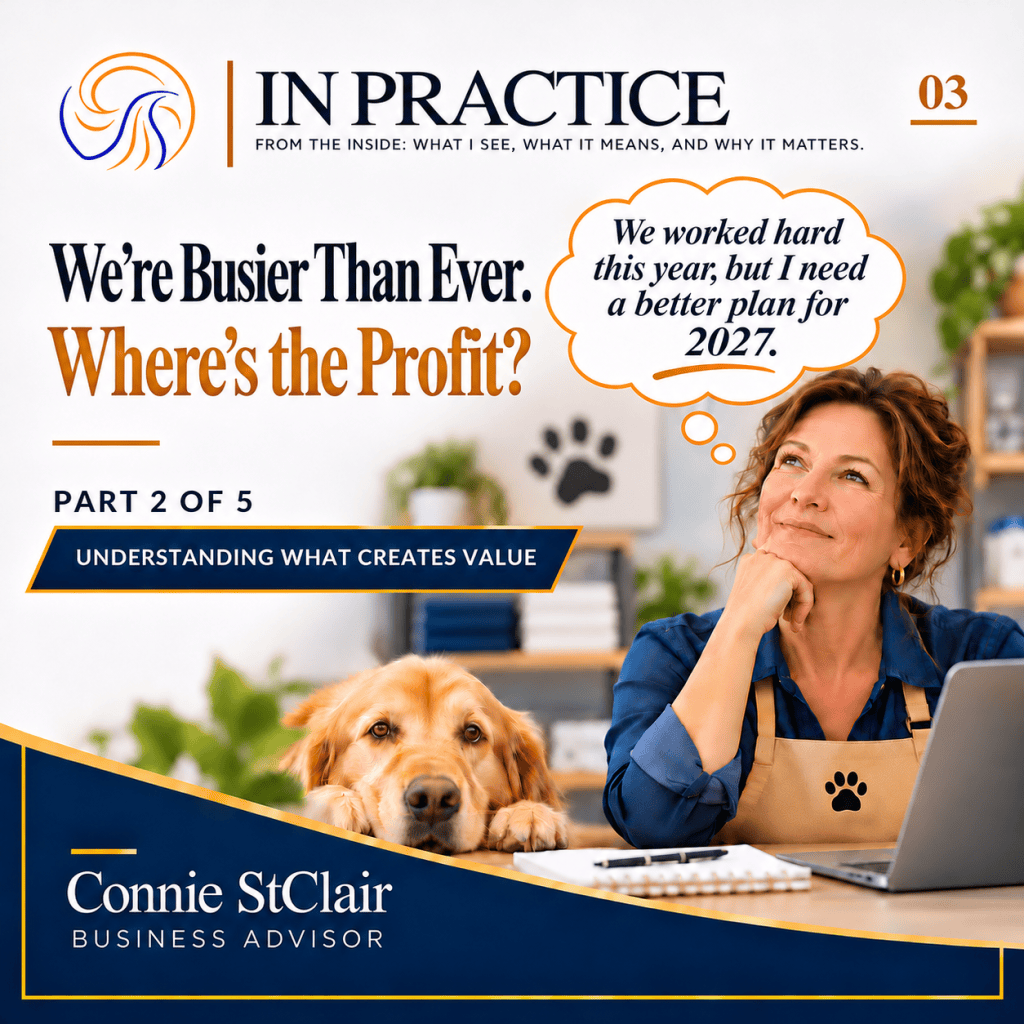
Part 2: Understanding Which Services Create Value | Paws & Company Series
Last time, we met Paws & Company, a fictional pet-care business that entered 2026 with two goals: increase revenue and grow its customer base.
By November, both goals appeared to be on track. Business was busy, customers were happy, and the team was working hard.
But was the business actually better off?
Before making plans for 2027, the owner decided to look past total sales and examine what each service was really contributing to the business.
At first glance, grooming looked like the clear winner. Appointments were booked weeks out, and customers kept asking for more availability. Daycare brought in steady, recurring visits. Boarding generated large invoices around the holidays.
Naturally, the owner assumed expanding grooming was the obvious move for 2027.
Then the owner started connecting what was happening on the floor to what was showing up in the numbers.
- Grooming generated the highest total revenue, yet it required specialized labor, supplies, and one-on-one appointment time. After accounting for those direct costs, each appointment left far less profit than expected.
- Boarding produced big spikes during peak holidays, but demand swung widely across the rest of the year.
- Daycare brought in smaller individual payments, but regular repeat visits and the ability to supervise several dogs together meant it generated more financial contribution after direct costs per staff hour than grooming.
The picture suddenly looked very different.
The service with the highest demand wasn’t the highest-value service.
It’s a trap many business owners fall into. When customers are asking for more of something, it feels like an automatic cue to invest and expand it. Meanwhile, a higher-value service with slightly quieter demand gets overlooked, even though promoting and building it could strengthen the entire business.
Understanding your numbers requires more than reviewing total revenue and expenses. It means looking at how all the pieces fit together:
- Which services actually create the greatest financial value? Not simply which ones generate the most sales or the loudest customer demand.
- What does it truly cost to deliver each one? Consider specialized labor, supplies, space, and time.
- Where is there untapped room to build? Sometimes a high-value service doesn’t need massive volume to move the needle if it is promoted intentionally.
For Paws & Company, the next step wasn’t rushing to hire another groomer just because the schedule was full. The owner now had a clearer understanding of what each service contributed to the business. And the decision about what to expand in 2027 was no longer quite so obvious.
The next question was whether the business could realistically support expanding daycare.
Because before you decide what to grow, you need to understand what’s worth growing.
Next time, we’ll look at the operational side of Paws & Company: even when a service creates strong financial value, does the business have the people, skills, space, and capacity to expand it?


Leave a Reply